Charging
Charging an EV in Australia, made simple
Where to charge, which plug you need, what it costs and how long it takes: clear answers for home and public charging.
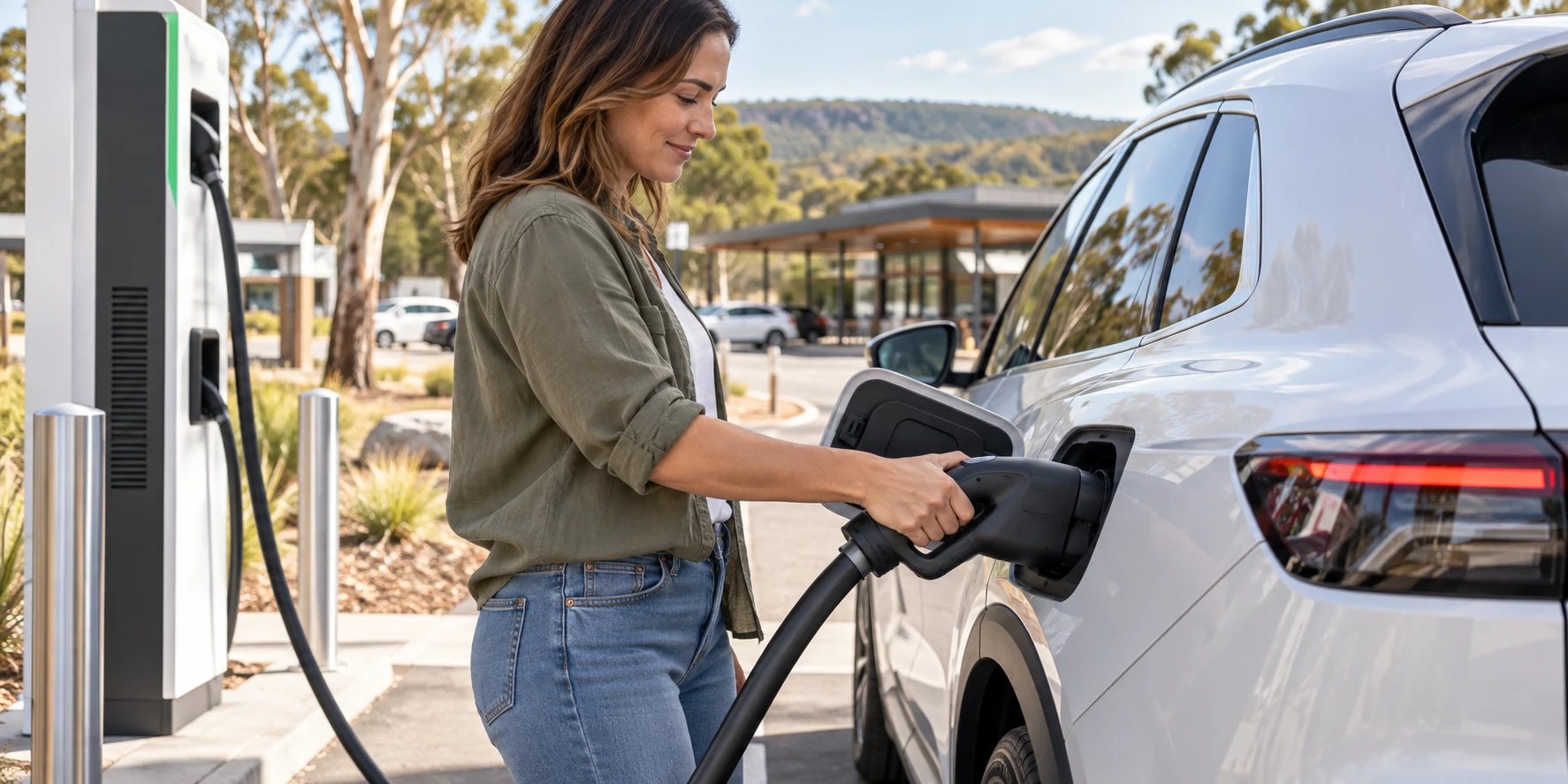
Find a Charger
Public charging sites across Australia on one map. Search a suburb or postcode, or use your location, then filter for DC fast charging or your car's plug and get directions.
Planning a trip?
Ask Indigo how to plan charging stops and which network apps to set up first.
Charging guides
Everything you need to know
Charging Networks
Charging Costs
Charger Types
Charging Guides
The basics
Home charging vs public charging
Most owners with off-street parking do the bulk of their charging at home, and use public chargers for longer trips. Here's how the two compare.
Charging at home
Plug in overnight and start most days with the charge you need. Cost depends on your electricity tariff; off-peak and rooftop solar can make it much cheaper.
- Portable charger on a standard outlet: around 2 kW, slow but handy
- Wallbox on a typical single-phase supply: up to about 7 kW
- Three-phase wallbox: up to 22 kW, limited by your car's onboard charger
- Installed by a licensed electrician
Public charging
Destination AC chargers top you up while you're parked; DC fast chargers get you back on the road on longer trips. Pricing varies by network and time of day, so check the network's app for current rates.
- Public AC: commonly 7–22 kW, often BYO Type 2 cable
- DC fast: commonly 50–350 kW, with an attached CCS2 cable
- Actual speed is limited by what your car can accept
- Usually started with an app, RFID card or contactless card
Help shape it
Tell us what charging info you need
We're building the charger database and guides around real questions. Tell us what you'd find most useful, and register your interest to hear when Find a Charger launches.
Ask Indigo
Still have a question?
Ask Indigo is Indigo's AI assistant for electric and hybrid vehicles. Ask in your own words, for example:
“Can I charge my car from a normal power point at home?”